.svg)
Rare Nocturnal Owl Sighted In Jim Corbett Zones
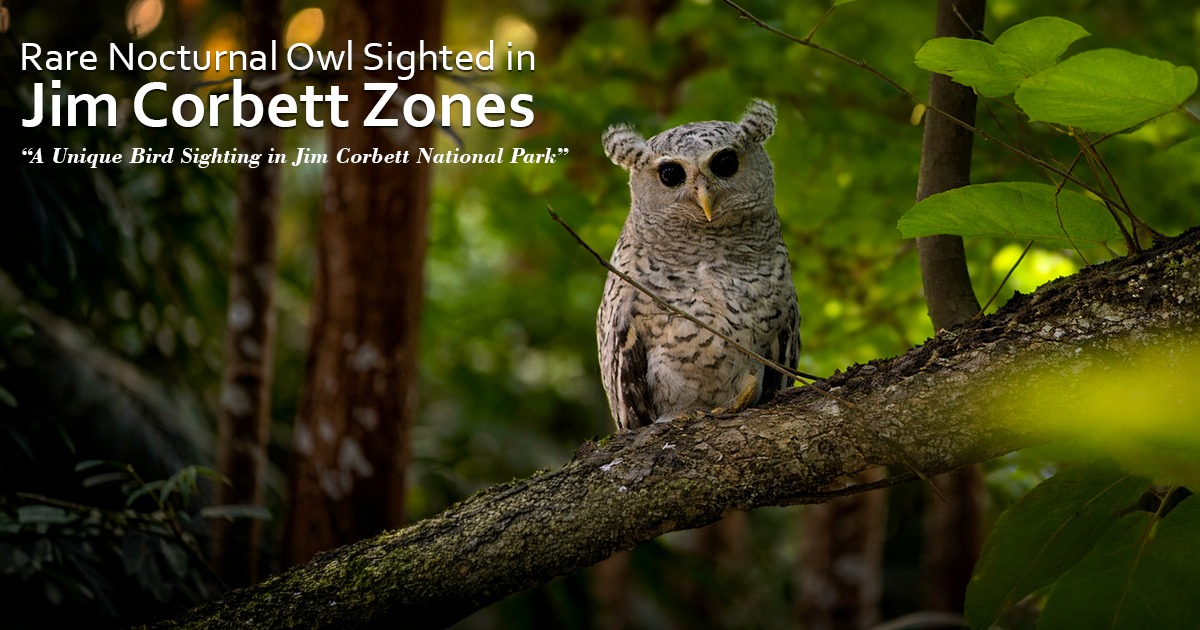
One of the most significant wildlife records has recently been made inside Jim Corbett National Park. There has been a sighting of a rare owl species, namely the Spot-bellied Eagle-Owl. Its scientific name is Bubo nipalensis. It is primarily a nocturnal bird and can be found resting in dense forest areas. Due to its secretive behavior and small population, it is a rare sight for tourists as well as the forest department.
This particular owl species has been an attraction for bird experts, wildlife photographers, and researchers. It is a significant sight for them as clear images and frequent sightings are essential for their research. The presence of this owl species in the forest area is an indication of a healthy forest habitat. It also shows that the forest provides favorable conditions for rare species of wildlife.
Exact Locations Where The Owl Was Seen
The rare owl was seen in the Sitavani forest area. It was also recorded in Ringora. Earlier, it had been documented in the Dhikala zone. Dhikala is one of the most popular tourism zones inside Jim Corbett National Park. These areas are located near the Ramnagar Forest Division, which is next to the park and supports similar forest conditions.
All these forest zones have dense vegetation, tall and mature trees, and a stable population of small animals. Such conditions are necessary for large nocturnal birds of prey like the Spot-bellied Eagle-Owl. Thick trees give safe resting places during the daytime. A healthy number of prey animals provides regular food at night. These natural conditions make these zones suitable for the survival of this owl species.
Forest officer Ankit Badola shared that the most recent sighting in Sitavani was reported through media sources. The fact that the owl has now been seen in multiple zones is important. It suggests that the bird is not limited to one small area. Instead, it shows that different parts of the forest are suitable for its survival. When a species is seen in more than one location, it strengthens the record of its presence. These repeated observations support the idea that the habitat in and around Jim Corbett National Park remains stable and supportive for rare wildlife.
Who Captured The Rare Owl On Camera?
The rare owl was photographed by wildlife enthusiast Deep Rajwar. Capturing such a bird on camera is very difficult. This owl is active at night and usually stays in dense forest areas. Taking clear photographs requires patience, knowledge of animal movement, and understanding of forest conditions.
Deep Rajwar documented the owl on three separate occasions. The first sighting was in the Dhikala zone. The second sighting happened in Sitavani. The most recent sighting was in Ringora. These separate sightings in different locations increase the reliability of the record. When a species is photographed more than once and in different areas, it becomes strong proof that the species lives in that region.
Rajwar said that seeing and photographing this owl was a special experience for him. Observing such a rare and shy bird in its natural habitat is uncommon. Taking a clear photograph is even more challenging. His photographs provide valuable documentation for researchers and forest authorities. Such records help in wildlife monitoring, data collection, and conservation planning inside Jim Corbett National Park. Proper documentation is important for future research and protection efforts.
Important Facts About The Spot-Bellied Eagle-Owl
The Spot-Bellied Eagle-Owl, scientifically called Bubo nipalensis, is a large owl species found in India and parts of Southeast Asia.
It has a strong body and powerful hunting ability. The bird measures around 20 to 25 inches in length and can weigh nearly 2 kilograms.
It has large orange eyes and a solid body structure that helps it catch and carry prey.
Its feather colors and patterns help it remain hidden while resting on tree branches during the day.
This owl is active only at night. It stays quiet and hidden during the day and starts hunting after sunset.
Its food includes peacock chicks, rabbits, lizards, small mammals, and reptiles. As a top predator, it controls the population of these animals and supports ecosystem balance.
Habitat loss, forest cutting, and human disturbance have reduced its numbers. Confirmed sightings help scientists track survival areas and plan proper conservation actions.
Why This Sighting Is Important For The Forest
The presence of a large predatory bird shows that the ecosystem is functioning properly. Such predators require healthy prey populations, good forest cover, and limited human disturbance. They cannot survive in damaged or highly disturbed forests.
Experts believe that the sighting of this owl confirms that certain parts of Jim Corbett National Park are in good ecological condition. Biodiversity is not measured only by counting how many species live in an area. It is also measured by checking whether top-level predators are present. Their survival shows that the lower levels of the food chain are also stable.
This sighting increases the conservation value of the park. It highlights the need to continue habitat protection, scientific monitoring, and responsible tourism. Protected forests are not only tourist places. They are important ecological zones that support many types of life.
This national park is one of the most important protected areas in India, and many people also make Jim Corbett bookings for safaris to enjoy its natural environment. Continuous forest management, anti-poaching efforts, and habitat preservation have helped maintain wildlife diversity. The recent owl sighting is evidence that these conservation actions are effective. It shows that long-term protection efforts are meaningful and necessary.
Local Beliefs, Owl’s Call, And Tourism Interest
The Spot-bellied Eagle-Owl has a strong call at night that can be heard from a long distance in the forests. Earlier, some villagers were confused about the strong sound of the call and associated it with superstitions.
Sanjay Chhimwal, a wildlife expert, clarified that this bird is a natural predator and does not pose any unnecessary danger to humans. The call of this bird is only for communication, as is the case with other nocturnal animals.
After this incident, there has been an increase in tourism interest. People looking for Jim Corbett bookings are now more interested in rare species. Visitors to Jim Corbett National Park normally look for tigers and elephants, but rare birds also indicate that the forest is healthy and protected.
-
HURL Organises Learning Programme At Jim Corbett
May 27, 2026 -

Luxury Wellness Comes To Jim Corbett National Park
April 20, 2026 -

Jim Corbett National Park Safari Zones Guide
April 13, 2026 -

Union Minister’s Visit to a Jim Corbett Hotel
April 09, 2026
Recent Posts
Related Post

Jim Corbett Park To Get Better Wildlife Protection
Jim Corbett National Park in Uttarakhand will soon have stronger protection for its animals and forests. It is one of India’s oldest parks and is kn...

Most Peaceful Stays Inside and Around Jim Corbett
Jim Corbett National Park is India's oldest and most known tiger reserve. This park is famous among people because of the thrilling safari rides. Here...

Guide to Forest Rest House Stays in Jim Corbett
Many people plan their holidays to Jim Corbett National Park, especially those who are animal lovers. This park is the first-ever national park in Ind...
(0) Comments:
- No reviews available.